1 Person vs 2 Person Infrared Sauna: Which Cabin Fits Home Use
A 1 person infrared sauna fits tighter rooms and solo routines. A 2 person cabin helps couples share heat if doorway path and power still work.
By Harper Lin
Recoverypicks is reader-supported. As an Amazon Associate we earn from qualifying purchases. Learn more.
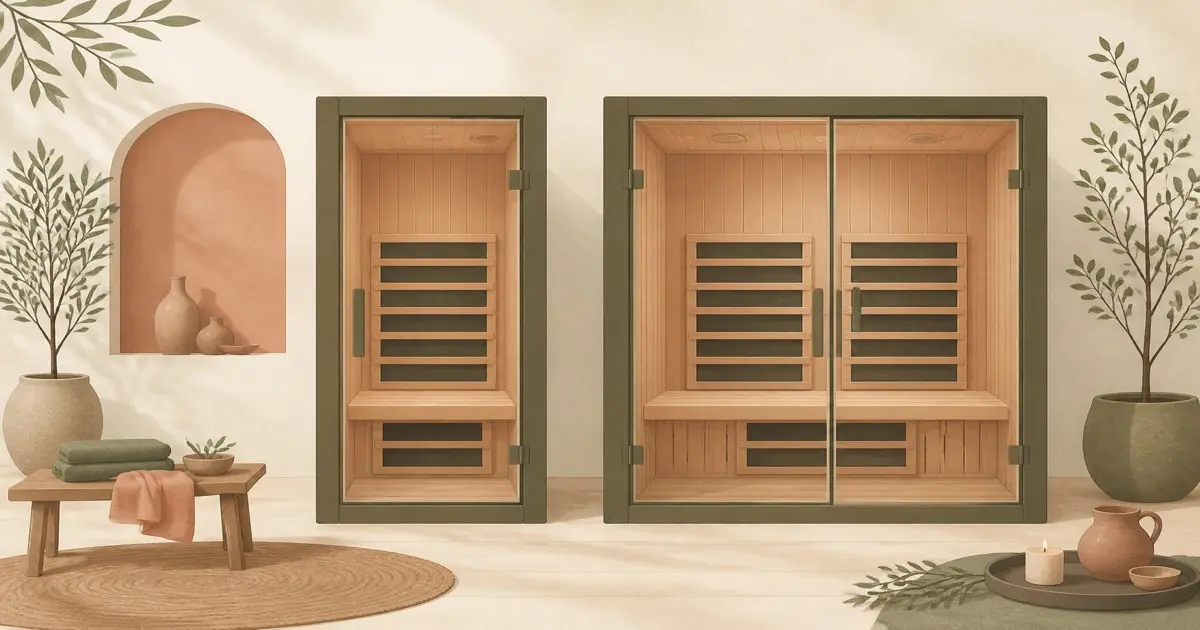
The short answer: Pick a 1 person infrared sauna when space, power, and solo use come first. Pick a 2 person infrared sauna when you will share sessions and the doorway path plus circuit can handle the larger cabin.
The 1 person vs 2 person infrared sauna decision looks like a lifestyle photo choice. It is mostly a floor-plan and wiring choice. This guide is for US home buyers comparing cabin size before they order. Notes come from published specs and common install headaches. We have not assembled every cabin brand in a lab.
For heater and power basics, start with best infrared sauna. For infrared vs traditional heat, see best home sauna. More guides are on the blog, and the homepage points to current recovery gear.
Start with how you will actually sit
Seat count should match weekly habits, not a dream schedule.
Choose one person when:
- Most sessions will be solo
- You want a tighter footprint and simpler placement
- You care more about fitting a spare room than hosting guests
Choose two person when:
- You and a partner will share heat on a regular schedule
- You have a clear path from delivery to the final wall
- You accept a larger warm-up volume and higher power needs
If you will share once a month, a one-person cabin plus a calendar is often the calmer buy.
Footprint, doorway, and ceiling height
Two-person cabins are not just “a bit wider.” They change doorway turns, stair carries, and the final rectangle on the floor.
Measure:
- Door width and hall turns for delivery day
- Ceiling height with any roof peak or trim
- Rear and side clearance the manual asks for
- Door swing so the cabin door does not hit a bed or rack
Tape the footprint. Sit in a chair inside that tape for a minute. If the room already feels crowded, the larger cabin will feel worse once walls go up.
One-person cabins fail the same tests when people ignore height. Tall users should check bench height and headroom, not only exterior width.
Power and warm-up reality
Larger cabins usually draw more power and take longer to feel even. Read amperage, plug type, and whether a dedicated circuit is required. Guessing from a product photo is how cabins sit in boxes in the garage.
One-person units can still need a serious circuit. Size does not remove the electrical checklist. Confirm outlet location so the cord does not cross a wet path or a walking lane.
If your panel is already maxed, solve power before you fall for a two-seat interior photo.
Heat feel and privacy
A smaller cabin can feel cozier and reach a steady session faster for one body. A larger cabin can feel airier, which some people like and others call uneven if heater coverage is thin.
Privacy matters at home. A one-person cabin in a quiet corner can be easier to use on a weeknight. A two-person cabin in a shared room may get used less if someone feels on display.
Bring best sauna towels either way. Sitting on a towel protects benches and keeps the cabin cleaner between sessions.
Cost, assembly, and long-term friction
Two-person cabins often cost more up front and take longer to assemble. They also leave you with more glass, more panels, and more surfaces to wipe.
One-person cabins are usually faster to place and easier to commit to in a rental, as long as the lease and floor load allow it. Always check flooring and any HOA or building rules before you buy.
If you are unsure about a permanent cabin, a portable infrared sauna blanket can be a trial path for heat habit without a full install. Upgrade to a cabin once you know you will keep the routine.
A simple decision path
- Count real shared sessions per week, not hoped-for ones.
- Measure path and final footprint with tape.
- Confirm circuit and plug type in writing.
- Compare heater layout and controls on shortlists only after size clears.
If steps 2 or 3 fail for two seats, buy one seat and keep the room usable. If they pass and you will share often, two seats can be the better long-term fit.
Bottom line
A 1 person infrared sauna is the default for tight US homes and solo routines. A 2 person infrared sauna is worth it when shared use is real and the room plus power can carry the larger cabin. Size first, heaters second.
Frequently Asked Questions
Is a 1 person infrared sauna enough for most homes?
Yes, if you mostly sit alone and space is limited. One-person cabins are easier to place and often simpler on power. Confirm height and door path before you buy.
When is a 2 person infrared sauna worth it?
Choose two seats when you will share sessions often and you have a clear install path plus the right circuit. Couples who rarely sit together can still prefer one seat for heat density and cost.
Does a two-person cabin heat the same as a one-person cabin?
Not always. Larger cabins need more heater coverage to feel even. Check panel layout and warm-up notes, not only seat count. See best infrared sauna.
Can I put either size in a bedroom?
Sometimes, if clearance, height, and electrical needs work. Spare rooms, basements, and garages are often easier. Humidity feel and door swing still matter.
What if I want heat without a cabin?
A portable infrared sauna blanket is a lower-commitment option for solo heat in small apartments. It is not the same as sitting in a cabin, but it solves space for many buyers.