Best Recovery Sandals (2026): Cushioned Slides for Sore Feet
Accessories
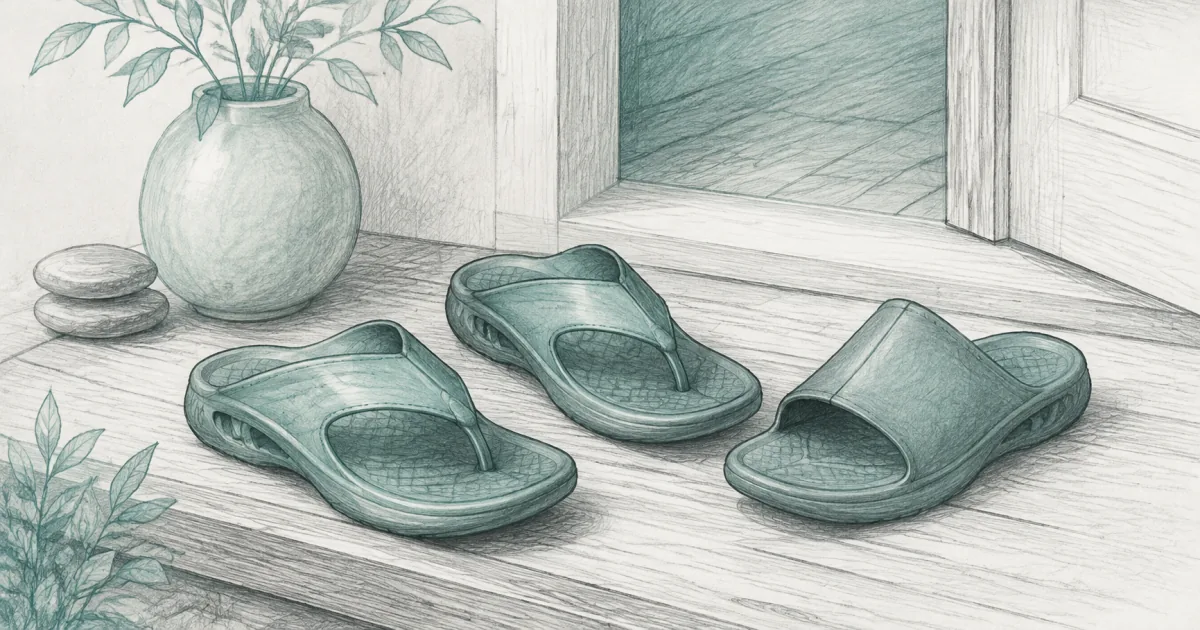
The best recovery sandals for most people are cushioned foam slides that take load off tired feet after workouts, runs, or long standing shifts. OOFOS OOriginal is the default, with HOKA ORA as the rocker-geometry alt.
Our picks
A recovery sandal is not a fashion flip-flop. The job is to take load off your feet between training, work shifts, or runs, then get out of the way. The good ones feel like foam under your arch and a deep cup around your heel. The bad ones feel like flat rubber that flops sideways the moment you step off a curb.
If you want dry kneading or percussion instead, see our best foot massager and best massage gun guides. For arch work, the best plantar fascia roller covers the handheld ball options. Browse more picks in our recovery accessories hub.
What actually makes a recovery sandal work
Three things separate a real recovery sandal from a regular foam flip-flop: the foam density, the footbed shape, and the heel cup.
The foam should absorb impact rather than bounce it back into your joints. The footbed needs a clear arch contour, because a flat slab does nothing for tired plantar fascia. The heel cup should hold your heel centered so your foot does not slide on every step.
If any of those three is missing, you are paying recovery-sandal money for a regular pool slide.
Top pick: OOFOS OOriginal
The OOFOS Unisex OOriginal Recovery Sandal is the default pick for a reason. The proprietary OOfoam absorbs noticeably more impact than standard EVA foam used in cheap slides, the footbed has a deep heel cup and a pronounced arch contour, and the review trail is long enough that fit quirks and care habits are well documented.
It is not a fashion sandal. It is not for long-distance walking on uneven ground. It is for after the run, after the shift, and after the long day on hard floors.
Best for: gym bags, beside the door after runs, anyone whose feet or knees complain after standing work. Skip if: you want a structured shoe or you only want something for short walks around a pool.
Sizing is the most common confusion. The last is men’s, so most women size down two from their usual women’s size, and half sizes size down because the foam cradle keeps the foot seated. If you have never owned a pair before, plan a five-minute indoor test before your first long wear.
Rocker alternative: HOKA Ora Recovery Slide 3
The HOKA Ora Recovery Slide 3 is for buyers who want more structure under the arch and a rocker geometry that helps tired calves and Achilles tendons move more easily between sets. The midsole uses sugarcane-based foam with airflow channels, and the rocker shape is more aggressive than a pure foam thong.
Best for: people who walk a lot around the house between training blocks, buyers who already like HOKA running shoes. Skip if: you want pure pillowy foam or you do not like a rocker stride.
The rocker shape does change your gait slightly, which is exactly the point during recovery. It is not the right tool for slow, flat walking if that bothers you. Pick OOFOS instead.
Recovery sandals vs other tools
A recovery sandal is a passive tool that supports your feet when you are not doing anything active. It does not replace a foam roller, a massage gun, or a real warm-up.
Use this quick filter:
- Recovery sandal: passive support between sessions and after standing shifts.
- Massage gun: fast broad coverage on calves, glutes, and back when noise is fine.
- Foam roller: large muscle groups that need sweeping coverage.
- Plantar fascia roller: targeted arch work on reachable tissue.
If you already own a foam roller and a massage gun, a recovery sandal earns its place because it works while you sit, walk, or sleep. None of the other tools does that.
When a recovery sandal helps the most
Three routines get the most out of a foam slide:
- After long runs or hard lower-body lifts, swap your shoes for the recovery slide the moment you walk in the door.
- During long standing shifts, wear them between commutes and lunch breaks to keep your arches from tightening up.
- After a hard day on concrete, slip them on in the evening and let the foam do the offloading while you cook or watch TV.
The pattern is the same: support your feet during the hours when you are not actively training, so the active hours feel less punishing.
Care that keeps the foam alive
Foam slides do not last forever, but they last longer with simple care.
Let them air dry between wears. Do not leave them in a hot car where soft foam can deform. Rotate between two pairs if you wear them every day, so each pair can recover its shape. Toss the OOFOS pair in a washing machine on cold and let them air dry.
Replace them when the arch contour flattens out or when the footbed feels thinner than a fresh pair. A sandal that has lost its cushion is no longer a recovery sandal, it is a regular slide.
Who should buy something else
Buy a real walking shoe or trail runner if you want something to wear for errands longer than 15 minutes on uneven ground. Buy a best foot massager if you want active kneading, not passive support. Buy a best massage chair if your feet hurt because your whole body needs longer sessions.
Buy a recovery sandal when the main complaint is feet that hurt after the day is done, especially after running or standing work. That is the job the OOFOS and HOKA ORA were designed for.
The bottom line
Start with the OOFOS OOriginal Recovery Sandal for cushioned foam offload after runs, long shifts, or chronic heel pain. Pick the HOKA Ora Recovery Slide 3 if you want a rocker-geometry stride and a more structured midsole between training blocks. Both are real recovery footwear, not pool slides. Care for the foam and they will earn their keep for the better part of a year.
Browse more on the Recoverypicks blog or return to the home page.
Frequently Asked Questions
What is the best recovery sandal for most people?
The OOFOS Unisex OOriginal Recovery Sandal is the best default for tired feet, post-workout recovery, and standing shifts. Choose the HOKA Ora Recovery Slide 3 if you prefer a rocker-geometry stride and a more structured midsole.
Are recovery sandals worth it?
Yes if you spend long hours on hard floors, train hard, or have recurring heel or arch pain. They are not worth buying as fashion flip-flops or for long-distance walking on uneven ground.
OOFOS or HOKA ORA?
Choose OOFOS when you want pure cushioned sink and a long review trail. Choose HOKA ORA when you want rocker geometry that helps tired calves and ankles move more easily between sessions.
Can recovery sandals replace insoles?
No. A recovery sandal is for after activity. If you have ongoing plantar fasciitis or arch pain, talk to a clinician about proper insoles for your everyday shoes.
How long do recovery sandals last?
Foam thong styles usually outlast their cushioning under heavy daily wear in 6 to 12 months. Rotation between two pairs and air drying between uses extends the life of any foam slide.
Should I size up or down in OOFOS?
OOFOS are unisex on a men’s last. Most women size down two from their usual women’s size. Half sizes should size down, because the foam footbed keeps your foot seated.
Who should not wear recovery sandals?
Skip them as everyday walking shoes on uneven surfaces, and skip them for any sport that needs lateral stability. They are recovery footwear, not performance footwear.