Best Compression Socks (2026): Graduated Picks for Home Recovery
The best compression socks for most people are a true 20-30 mmHg pair you can get on without a wrestling match. Start firmer for recovery days, or buy a 15-20 mmHg pack if you want all-day wear.
By Nate Brooks
Recoverypicks is reader-supported. As an Amazon Associate we earn from qualifying purchases. Learn more.
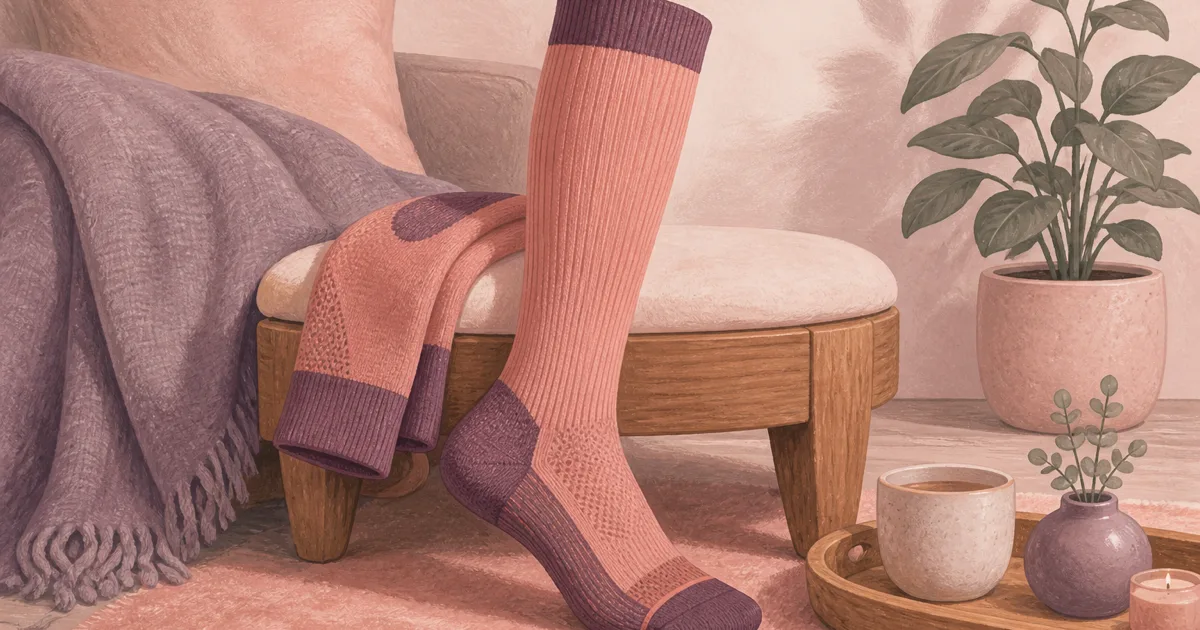
The short answer: The Physix Gear Compression Socks 20-30 mmHg are the best compression socks for most home recovery buyers. Choose the CHARMKING Compression Socks (3 Pairs) 15-20 mmHg when you want a lighter everyday pack, or the SB SOX Compression Socks 20-30 mmHg when you need cushioning and a clearer wide-calf size path.
Our picks
The best compression socks are graduated knit socks with a printed mmHg range, not fashion crew socks with a tight cuff. Pressure should be strongest at the ankle and ease toward the calf. If a listing will not say 15-20 or 20-30 mmHg, keep walking.
This comparison is for US buyers shopping live Amazon pairs. Specs and ownership notes come from current product pages and common review themes. We have not run a clinic trial on these SKUs. If swelling is new, one-sided, or follows surgery, talk to a clinician before you order.
If you want a sit-down pump instead of something you wear, start with compression boots. Lower-leg wraps live in calf massager. Foot-only complaints still belong on best foot massager.
How we chose
We shortlisted live amazon.com knee-high listings with a stated mmHg range, a working buy box, ratings at or above 4.0, and enough reviews to see sizing and wash complaints. Then we split the field into a firm default, a lighter multipack, and a cushioned long-shift pair.
Selection filters:
- Live US PDP with In Stock and a title that still matches the card.
- Printed compression range, not "support" as a vibe.
- Rating at or above 4.0 with thousands of owner ratings, not a handful of Vine notes.
- Differentiated jobs: firm recovery pair vs 15-20 pack vs cushioned standing pair.
- Honest skip reasons, especially pull-on difficulty and calf measurement.
We skipped ankle sleeves, mystery copper claims with no mmHg, and calf-only sleeves that are not socks.
Quick comparison
Top pick: Physix Gear Compression Socks 20-30 mmHg
The Physix Gear Compression Socks 20-30 mmHg are the default because the listing is live, the compression number is honest, and the US review trail is large enough to see real fit notes. 20-30 mmHg is the range most recovery shoppers actually mean when they search best compression socks.
Buy this if you want one solid pair for flights, standing days, or post-training swelling. Skip it if you have never worn compression and suspect you will hate the tug. 20-30 mmHg takes a minute to get on. That is the product working, not a defect, as long as you matched the size chart.
Unisex S/M and L/XL keep the choice simple. If your calf is at the edge of a size, read recent size comments for that letter, not the lifestyle photo.
Best value: CHARMKING Compression Socks (3 Pairs) 15-20 mmHg
The CHARMKING Compression Socks (3 Pairs) 15-20 mmHg win the pack lane. Three pairs at 15-20 mmHg means you can wash one set and still have a pair for tomorrow. The Amazon rating history is enormous, which is what you want in a category full of no-name knit.
Buy this if you want all-day wear, nursing or retail shifts that last forever, or a first pair that will not feel like a tourniquet. Skip it if you already tried 15-20 mmHg and it felt like a regular sock. Then you want Physix or SB SOX.
Multipacks are never perfectly identical. If one pair feels looser after a few washes, rotate it to easy days and keep the firmer pair for travel.
Best for long shifts: SB SOX Compression Socks 20-30 mmHg
The SB SOX Compression Socks 20-30 mmHg are the standing-shift pick. The listing calls out a cushioned heel and sole, plus a calf-measurement chart with a wide-calf path. That is the usual failure point for nurses, cooks, and anyone whose calf does not match a fashion sock chart.
Buy this if you are on hard floors for hours and 20-30 mmHg is already the number you want. Skip it if you only need a cheap three-pack for the gym bag.
Measure calf circumference standing, then check shoe size against the chart. Upsize if you sit at the top of a range. A sock you cannot get past the heel is not "more compression." It is the wrong size.
mmHg, fit, and when to skip
Graduated compression is a number, then a fit. 15-20 mmHg is milder and easier for all-day wear. 20-30 mmHg is firmer and more of a recovery tool. Higher medical classes exist. They are not Amazon impulse buys.
Pull-on difficulty is normal at 20-30 mmHg. Sharp pain, numbness, or toes that change color is not. Take the socks off. If you have circulation disease, neuropathy, open wounds, or a clot history, this is a clinician question.
Wash in a bag, skip high heat, and replace pairs that bag out at the ankle. Compression that has gone slack is just a tight-looking sock.
Compression socks vs boots and wraps
Socks go with you. Boots stay on the sofa with a pump. A calf massager is a 20-minute wrap, not footwear. If your complaint is "my legs feel cooked after a shift," start with socks. If your complaint is "I want a clinic squeeze after training," stay with compression boots. If it is only the calf and you will sit still, the calf massager is enough.
Do not stack max-intensity boots, a long sock day, and a cold plunge because a video did. Pick one stressor until you know how you feel.
Knee pain is a different tool. See best knee massager instead of hoping a sock will fix the joint.
Frequently Asked Questions
What is the best compression socks pick for most people?
The Physix Gear Compression Socks 20-30 mmHg are the default. They are a live US listing with firm graduated compression and a deep review trail. Move to CHARMKING if you want lighter 15-20 mmHg in a three-pack.
What mmHg should I buy?
15-20 mmHg is the everyday lane for travel and first-time wear. 20-30 mmHg is the firmer recovery lane. Medical-grade numbers above that belong in a clinician conversation, not a shopping cart guess.
Are compression socks the same as compression boots?
No. Socks are knit garments you wear while you move. Compression boots are pumped sleeves you sit in for about 20 minutes. Different jobs. Some people own both.
How do I pick a size?
Use shoe size and calf circumference from the listing chart. Measure the fullest part of the calf standing. If you are between sizes, size up rather than forcing a tourniquet.
Can I wear them all day?
15-20 mmHg pairs are built for that. 20-30 mmHg is often a training day, a long flight, or a standing shift, not a 16-hour default. Take them off if you get numbness, color change, or pain.
Will they help swelling after a run?
Many people use graduated socks for that. They are not a diagnosis and they are not a substitute for a calf massager or boots if you want a sit-down squeeze. This page is not medical advice.
Do I need copper or fancy yarns?
No. Graduated mmHg, a size that goes on, and a pair you will wash beat marketing fibers. Skip listings that hide the compression number.
When should I skip compression socks?
Skip them if a clinician has told you to avoid compression, if you cannot get them on without pain, or if you have unexplained swelling, wounds, or circulation questions that need a person, not a product page.