Best Plantar Fasciitis Night Splint (2026): Boots vs Soft Stretch
The best plantar fasciitis night splint is the one you can sleep in for weeks. Soft boots win for comfort. Firmer shells win when you need a stronger overnight stretch.
By Alex Turner
Recoverypicks is reader-supported. As an Amazon Associate we earn from qualifying purchases. Learn more.
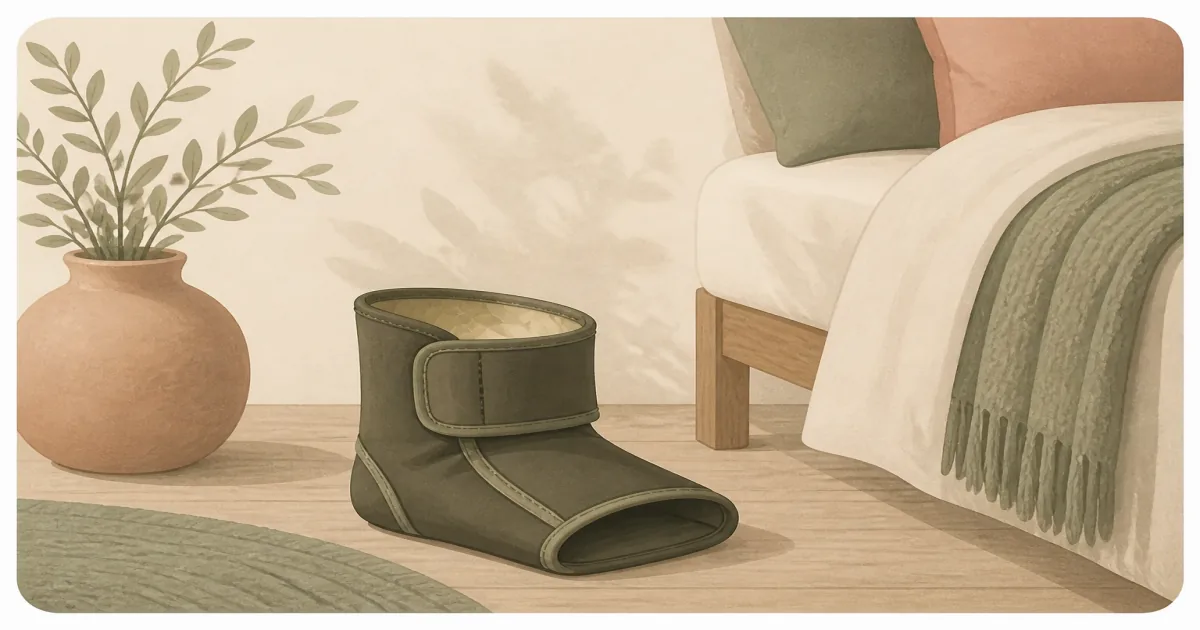
The short answer: The Vive Plantar Fasciitis Night Splint Plus Trigger Point Stretch Wedges (paid link) is the best plantar fasciitis night splint for most people because you are more likely to wear a padded soft boot night after night. Choose the United Ortho Plantar Fasciitis Adjustable Leg Support Brace (paid link) when you need a firmer stretch, and keep BraceAbility Sleeping Stretch Boot (paid link) as the alternate padded shell.
Our picks
Morning heel pain often starts the night before. Your foot points down while you sleep, the fascia shortens, and the first step feels like a tear. A night splint holds a gentle stretch so that first step is less sharp.
The hard part is not buying a brace. The hard part is sleeping in it for weeks. Comfort beats theory. That is why this guide starts with a soft boot, then steps up to firmer shells.
For daytime foot recovery tools, see best foot massager and best foot spa. More home recovery gear lives on the blog.
Soft boot vs firm brace
If you wake up three times fighting the brace, it is not helping. Downgrade stretch or switch styles before you quit the habit entirely.
Vive Plantar Fasciitis Night Splint
This is the top pick for most shoppers. The soft shell and removable wedges let you start milder, then add stretch as nights get easier. Wide straps and left-or-right fit keep the setup simple.
Wear a thin sock if straps rub. Start with one wedge or none. Build up. If the Velcro pops open, retension before bed instead of hoping it holds through a restless night.
United Ortho Adjustable Night Splint
This is the firmer stretch option. Adjustable flexion straps give you more control when a soft boot is not enough. The tradeoff is bulk and a longer adjustment period.
Buy it if mornings are still brutal after a soft boot trial. Skip it as a first brace if you already hate sleeping on your back or side with hard shells.
BraceAbility Sleeping Stretch Boot
This is the alternate sleeping boot. You still get a padded shell, a removable wedge, and clear size lanes. Use it when you want another boot-style option in the same job family as Vive.
Measure carefully. A medium that is too short will dig into the calf and end the experiment early.
How to make nights tolerable
Put the brace on while you are still awake and reading. Adjust straps before lights out. Keep a spare sock by the bed. If your calf cramps, loosen one notch rather than ripping the brace off for good.
Side sleepers usually need more strap tinkering than back sleepers. If the brace twists when you roll, retension the midfoot strap and try a thinner sock. Stomach sleepers often hate every hard shell. A softer boot is the only realistic path for that group.
Pair nights with simple daytime work: wall calf stretches, slower first steps, and shoes that do not flop. A foam roller or calf massager can help the lower leg feel less locked before bed.
Keep a note on your phone for the first two weeks. Write down whether first-step pain felt sharper, the same, or duller. Guessing from memory is how people quit useful tools too early.
Fit mistakes that waste money
Buying by ankle vibe instead of the size chart is the common failure. Shoe size ranges exist for a reason. A shell that is too short digs into the calf. A shell that is too long lets the foot slide and kills the stretch.
Another mistake is max stretch on night one. Your fascia did not tighten in a single evening. It will not unlock because you cranked every strap until your toes went numb. Start mild. Add wedge height later.
Do not wear the brace over a thick hiking sock and then blame the product for bulk. Thin sock, clean skin, dry straps.
When a night splint is the wrong tool
If you have numbness, unexplained swelling, an open wound, or a recent fracture, stop shopping Amazon and talk to a clinician. Night splints are recovery aids, not diagnosis.
If your pain is mainly under the arch after long standing shifts and mornings are fine, daytime support and load management may matter more than overnight stretch. Standing workers often get more from footwear changes and compression socks than from another bedtime gadget.
If you already sleep poorly and wake anxious about gear on your leg, solve sleep first. A brace you remove at 2 a.m. every night is theater.
Building a two-week trial
Treat the first 14 nights as a trial, not a personality test. Nights 1 to 3 are about fit. Nights 4 to 7 are about wearing it longer. Nights 8 to 14 are about whether morning steps feel less sharp.
Keep the same stretch setting for several nights before changing wedges. If you change three variables at once, you learn nothing. If mornings improve but sleep collapses, loosen one notch and continue.
After two weeks with honest wear, decide: keep the soft boot, step up to United Ortho, or stop and get in-person care. Do not buy a third brace to avoid that decision.
Bottom line
Start with the Vive (paid link) soft night splint if you want the best shot at wearing something for weeks. Step up to United Ortho (paid link) when you need firmer stretch. Keep BraceAbility (paid link) as the alternate boot. The best plantar fasciitis night splint is the one that is still on your foot at sunrise.
Frequently Asked Questions
What is the best plantar fasciitis night splint for most people?
The Vive Plantar Fasciitis Night Splint Plus Trigger Point Stretch Wedges is the best starting point because the soft boot is easier to wear for the weeks that matter.
Do night splints work for morning heel pain?
They can help by keeping the fascia from tightening overnight. They work best with daytime calf stretches and sensible footwear, not as a solo cure.
Soft boot or rigid brace?
Start soft if sleep quality is fragile. Move to a firmer adjustable brace like United Ortho if the soft boot feels too gentle after a few weeks.
How long should I wear a night splint?
Follow the product guidance and build up. Many people start with part of the night, then work toward full nights once the stretch feels normal.
Can I walk in a night splint?
Most are for sleep and short indoor steps only. Do not treat them like walking boots unless the listing clearly says otherwise.
Should I size up or down?
Follow the brand size chart for shoe size. Between sizes, the safer move is usually the larger option so straps do not dig in.
What else helps with plantar fasciitis at home?
Pair overnight stretch with calf massager work, smart compression socks for daytime standing, and a foot massager if you want heat after long shifts.