Best Muscle Scraper (2026): Stainless Steel IASTM Tools
Accessories
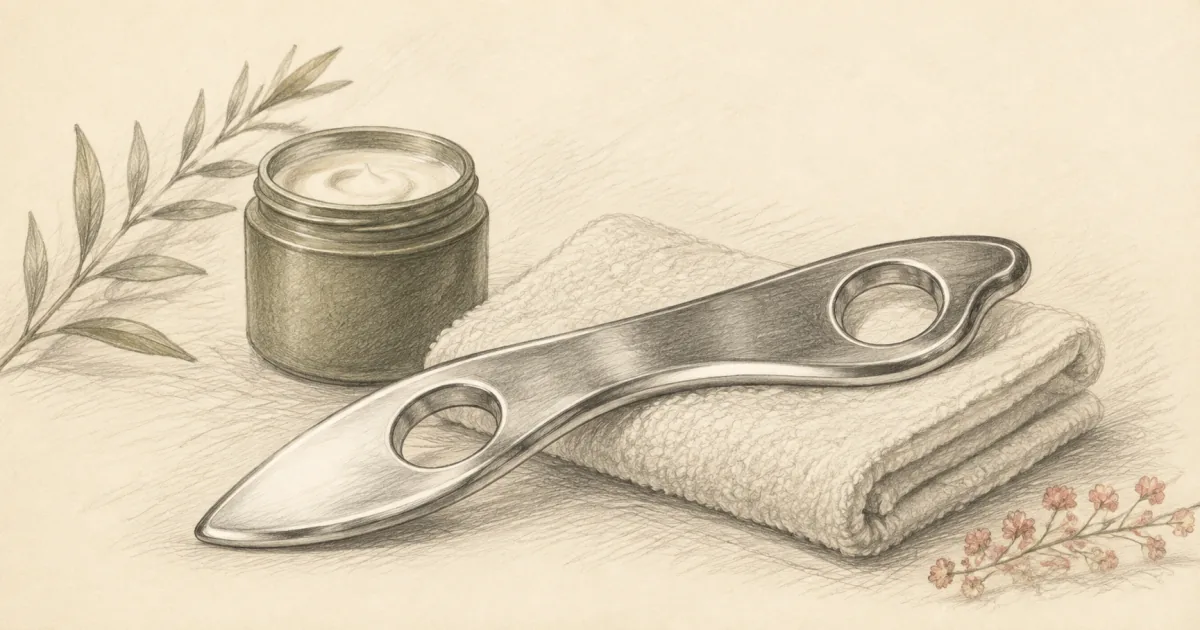
The best muscle scraper for most homes is a stainless steel IASTM tool with smooth polished edges and finger holes. The MyoMotions scraper is the default, with a heavier S-shape gua sha option for travel.
Our picks
A muscle scraper is a quiet, manual tool that glides along tight tissue with controlled pressure. It is not a massage gun and it is not a foam roller. The job is precise work along a muscle where you can feel exactly how much pressure you are applying.
If you want powered percussion, see the best massage gun guide. For leverage on mid-back knots, our best massage cane covers the J-shape tools. For precise spots you can reach with your hands, see best trigger point massager. Browse more picks in our recovery accessories hub.
What makes a muscle scraper worth buying
Three things separate a useful muscle scraper from a chunk of metal: edge finish, grip, and shape variety.
The edges should be mirror-polished so they glide without scratching. The grip should be steady enough that you can apply pressure for thirty seconds without the tool slipping. Shape variety matters because large muscle groups need a wider curve, while small joints need a pointed tip.
If any of those three is missing, you are paying recovery money for a kitchen implement.
Top pick: MyoMotions Metal Muscle Scraper
The MyoMotions Metal Muscle Scraper is the default pick because it combines 304 stainless steel with mirror-polished edges, finger holes for a steady grip, and a felt storage sleeve that fits a gym bag. The weight is reassuring in the hand without being heavy enough to tire your forearm during longer sessions.
It is the closest thing in this guide to a clinic-grade IASTM tool priced for home use.
Best for: buyers who want one polished scraper with a steady grip for calves, quads, lats, and forearms. Skip if: you want a pointed tip for very small joints, or if you prefer a lighter travel tool.
The finger holes take a little getting used to. Hold the tool so the curve matches the muscle, apply a thin layer of oil or lotion, and scrape in slow strokes along the length of the muscle. Spend 30 to 60 seconds per area before moving on.
S-shape alternative: BYYDDIY Stainless Steel Gua Sha
The BYYDDIY Stainless Steel Gua Sha Muscle Scraper Tool is the pick when you want an S-shape with a pointed tip for smaller joints. The polished 304 stainless steel holds up to years of regular use, and the long review trail makes it the easiest pick to commit to without seeing it in person.
Best for: buyers who want one tool that handles broad muscle groups and smaller joints, anyone who prefers a lighter tool than the MyoMotions scraper. Skip if: you want finger holes for a steadier grip, or if you only want to scrape very large muscle groups.
The S-shape can feel awkward on the chest or very small joints, which is exactly where a massage ball or trigger point tool may serve better.
Muscle scraper vs other tools
A muscle scraper is a quiet, manual tool for precise work along a muscle. It is not a replacement for any of the other recovery tools you might own.
Use this filter:
- Muscle scraper: precise work along a muscle with controlled pressure and slow strokes.
- Massage gun: fast broad coverage on large muscle groups.
- Foam roller: sweeping coverage on the largest muscle groups with body-weight rolling.
- Trigger point massager: small, precise spots you can reach with your hand.
- Massage cane: leveraged work on mid-back knots you cannot reach with a scraper.
If you already own a foam roller and a massage gun, a muscle scraper earns a place because it works on tissue the other tools cannot reach cleanly. Many buyers use the roller for warm-up, the gun for broad coverage, and the scraper for stubborn spots.
When a muscle scraper helps the most
Three routines get the most out of a scraper:
- After heavy lower-body sessions, scrape along the quads, hamstrings, and calves with oil and slow strokes to work on lingering tightness.
- During desk-heavy weeks, scrape along the forearms and lats where foam-roller reach is awkward.
- Before lower-body training, scrape gently along the quads and IT bands as part of a longer warm-up routine.
The pattern is the same: precise work in the minutes when you want targeted pressure, not broad percussion or rolling.
Safety and care
Do not use a muscle scraper over acute injury, open skin, varicose veins, blood-thinning medication advice to avoid pressure, or when a clinician restricted deep soft-tissue work. Stop on any sharp pain or visible bruising.
Use a thin layer of oil or lotion so the tool glides without dragging on skin. Wash the scraper with warm water and mild soap after each session, dry it off, and store it in a sleeve or pouch. Stainless steel does not need oiling and will not rust under normal bathroom humidity.
Who should buy something else
Buy a foam roller if you want the cheapest large-muscle tool for full-body rolling. Buy a massage gun if you want fast, powered broad coverage. Buy a trigger point massager if the tightness lives on small, reachable spots that do not need a long scraping stroke.
Buy a muscle scraper when the main complaint is stubborn tightness along large muscle groups and you want a quiet, manual tool with controlled pressure.
The bottom line
Start with the MyoMotions Metal Muscle Scraper for polished stainless steel, finger holes, and a steady grip for fascia scraping at home. Pick the BYYDDIY S-shape gua sha if you want a pointed tip for smaller joints and a long review trail. Both are quiet, manual tools that earn their place in a recovery kit that already has a foam roller and a massage gun.
Browse more on the Recoverypicks blog or return to the home page.
Frequently Asked Questions
What is the best muscle scraper for most people?
The MyoMotions Metal Muscle Scraper is the best default for fascia scraping at home, with smooth polished edges and finger holes for a steady grip. Pick the BYYDDIY S-shape gua sha if you want a pointed tip for smaller joints and the longest review trail in this guide.
Are muscle scrapers worth it?
Yes if you already use a foam roller or massage gun and still have stubborn tightness in large muscle groups like the quads, hamstrings, calves, or lats. They are not worth buying if you have not yet built a basic recovery routine with cheaper tools.
Stainless steel or plastic scraper?
Stainless steel is more durable, easier to clean, and glides well with oil or lotion. Plastic scrapers are lighter and cheaper but wear out faster and feel less stable under pressure.
How do you use a muscle scraper?
Apply a thin layer of oil or lotion, hold the tool at a low angle to the skin, and scrape along the muscle in slow strokes. Spend 30 to 60 seconds per area and stop on sharp pain or bruising.
Is a muscle scraper the same as a foam roller?
No. A foam roller is for large muscle groups with body-weight rolling. A scraper is a small handheld tool for precise work along a muscle with controlled pressure.
Is a muscle scraper better than a massage gun?
Different tools. A massage gun is fast, powered, and broad. A scraper is quiet, manual, and very targeted. Many buyers keep both and use them at different times of the week.
Who should skip a muscle scraper?
Skip over acute injury, open skin, varicose veins, blood-thinning medication advice to avoid pressure, or when a clinician restricted deep soft-tissue work. Stop on any sharp pain or visible bruising.
How do you clean a muscle scraper?
Wash with warm water and mild soap, dry it off, and store it in a sleeve or pouch. Stainless steel does not need oiling and will not rust under normal bathroom humidity.