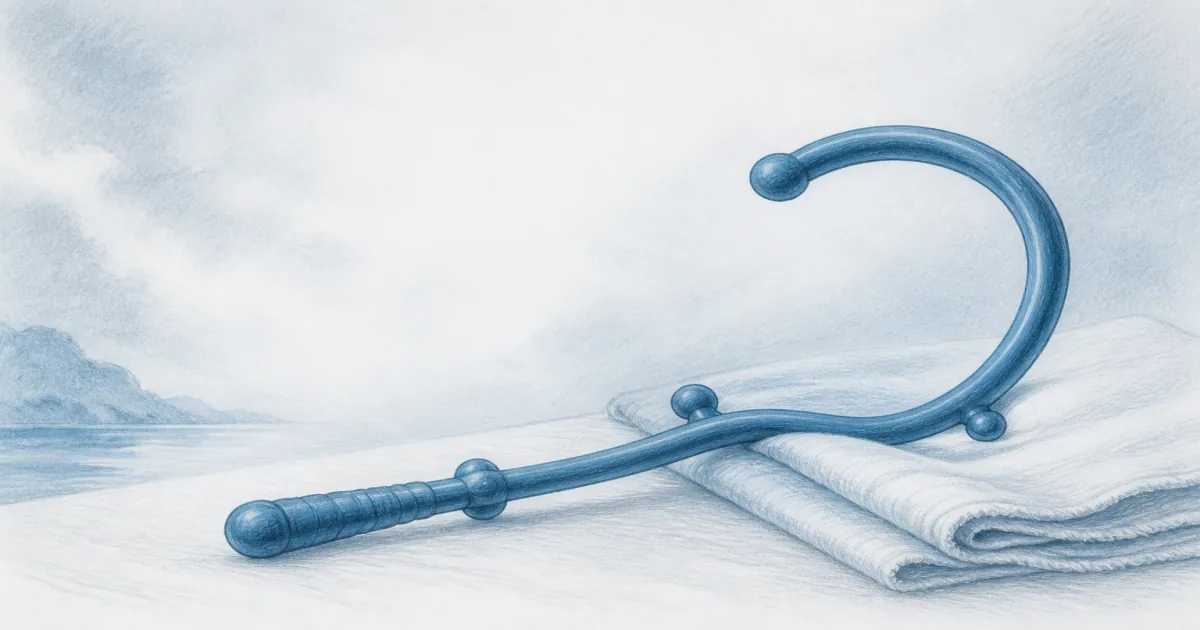
Best Massage Cane (2026): Thera Cane vs Body Back Buddy
Accessories
The best massage cane gives you leverage on mid-back knots without a partner. Thera Cane is the classic default; Body Back Buddy adds more knob shapes.
Our picks
A massage cane is leverage for spots your hands cannot reach cleanly. You hook a ball behind a shoulder blade or along the traps, then apply slow pressure with your arms instead of asking a partner for help. It is quiet, plug-free, and useful after desk days.
More recovery tools sit in accessories. If you want powered percussion instead, see best massage gun. Sibling guides live on the blog.
Massage cane vs other tools
Buy a cane when reach is the problem. Buy a smaller knob tool when precision on reachable tissue is the problem.
A cane also wins for quiet evening sessions when a massage gun would annoy housemates. It loses when you want broad, fast coverage across large muscle groups. In that case a gun or a seated back massager pad is usually the clearer tool.
Thera Cane vs Body Back Buddy
Thera Cane wins for most first-time buyers. The round cane shape is easy to learn, the six balls cover common angles, and the lighter frame is less intimidating. Use it seated or standing, start on a low-pressure ball, and work slowly across the tissue rather than parking on one sharp spot.
Best for: people who want the classic cane shape and a lighter learning curve. Skip if: you already know you want maximum knob variety and a stiffer frame.
Body Back Buddy Classic wins when you already know you want more knob shapes and a stiffer S-frame. It can feel bulkier. The payoff is more ways to press into shoulders, traps, and hard-to-reach zones once you learn the geometry.
Best for: buyers who want deeper leverage options after they outgrow a simple cane. Skip if: storage space is tight or you only need occasional light pressure.
LiBa is the budget path if you only want to test whether a cane belongs in your kit before spending on the better-known frames.
Best for: a low-cost trial. Skip if: you already prefer a known brand with a longer ownership trail.
What the first week should feel like
Day one is mostly learning where the balls land. Sit in a chair with a firm back, place one ball on the upper trap or beside the shoulder blade, and add pressure gradually. You should feel working tissue, not a sharp bone scrape.
By day three or four, most people settle into a short routine after desk work: two or three spots, twenty seconds each, then stop. If you keep chasing the same knot for minutes, you are usually pressing too hard or picking the wrong tool for the job.
Keep a towel or thin shirt between aggressive knobs and sensitive skin if the pressure feels scratchy at first.
How to use a massage cane safely
Sit or stand with good balance. Place a ball on the target area, then use the handles to add pressure gradually. Keep the ball moving. Ten to twenty slow seconds on a spot is usually enough for a home session.
Do not use the cane as a pry bar against the spine. Avoid bruised, swollen, or recently injured tissue. If pressure makes symptoms shoot down an arm or leg, stop and get clinical advice.
Common mistake: yanking the handles like a crowbar. The tool works because of leverage and patience, not because you can generate maximum force. Another mistake: hunting every knot in one session until you are sore the next day.
Storage and travel notes
A cane is long. Measure your closet or under-bed storage before you assume it will disappear neatly. Thera Cane is usually easier to tuck away than the bulkier Body Back Buddy frame. For travel, a cane can fit beside a suitcase, but a smaller trigger point massager or massage ball packs more easily for flights. If you only travel with a backpack, leave the cane at home and take the smaller tool.
Who should buy something else
Choose a back massager when you want heat or a seated pad. Choose a muscle roller stick for calves and quads while standing. Choose a trigger point massager when the knot is on the front of the body or another reachable zone and you do not need cane leverage.
Choose a massage gun when you want powered, broad coverage and noise is acceptable. Choose nothing new if your current foam roller and stretch routine already keep desk tension manageable.
The bottom line
Start with the Thera Cane unless you specifically want Body Back Buddy's extra knobs or a cheaper LiBa trial. Slow pressure beats aggressive digging, and a cane only helps if you will actually reach for it after long desk days.
Frequently Asked Questions
What is the best massage cane overall?
The Thera Cane Massager is the best default for most people. Choose Body Back Buddy Classic when you want more knob shapes and deeper leverage, or the LiBa cane when you want a cheaper first try.
Are massage canes worth it?
Yes if you have mid-back or shoulder knots you cannot reach with your hands and you will use slow, controlled pressure. They are not worth it if you only want a powered massage gun.
Thera Cane or Body Back Buddy?
Thera Cane is simpler and lighter. Body Back Buddy has more knobs and a stiffer S-frame for people who want more pressure options. Start with Thera Cane unless you already know you want the extra knobs.
Is a massage cane the same as a trigger point massager?
Related, but not identical. A cane is a leveraged hook for hard-to-reach areas. Handheld trigger point massagers are smaller tools for spots you can reach directly.
How hard should I press?
Hard enough to feel working tissue, not hard enough to bruise. Keep the ball moving slowly. Never jam a knob into the spine or onto a bone edge.
Can I use one on my neck?
Be careful. Many people use the smaller balls near the upper traps, but aggressive pressure under the jaw or on the front of the neck is a bad idea. For dedicated neck tools, see best neck massager.
Who should skip a massage cane?
Skip it over acute injury, open skin, unexplained swelling, or when a clinician told you to avoid deep pressure. Also skip if you cannot control the tool without straining your shoulders.