Best Leg Massager (2026): Air Compression Wraps for Recovery
Accessories
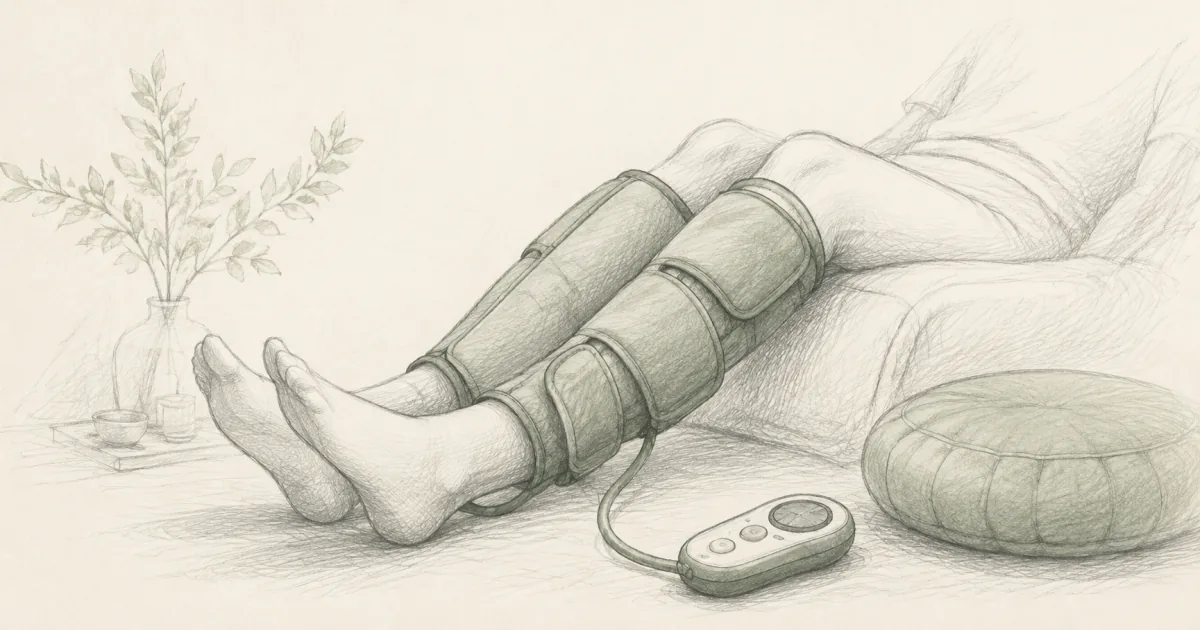
The best leg massager for most homes is a corded air compression wrap that covers feet, calves, and thighs at adjustable pressure. RENPHO RF-ALM070 is the default, with QUINEAR and SHINE WELL as the heated and serious-athlete alternatives.
Our picks
A leg massager earns its place when standing, sitting, or training leaves your legs heavy. It does not replace a real warm-up or a foam roller session. What it does well is squeeze tired calves and feet while you sit on the couch, which is a surprisingly useful slot in a busy week.
If you want powered broad-coverage massage, see the best massage gun guide. For standing and travel support, our best compression socks covers a different job. Browse more picks in our recovery accessories hub.
What separates a useful leg massager from a noisy toy
Three things matter most: coverage, intensity range, and pressure control.
Coverage means whether the wrap or boots actually reach the body parts that hurt. A foot-only wrap is fine for arch pain, but tired quads need thigh coverage. Intensity range matters because the lowest setting should be gentle enough for a beginner and the highest setting should still feel firm, not punishing. Pressure control means the chambers inflate in a sequence that mimics manual work, not random squeezing that just makes noise.
If any of those three is missing, you are paying recovery money for a vibrating pillow.
Top pick: RENPHO Leg Massager
The RENPHO Leg Massager (RF-ALM070) is the default pick because it covers feet, calves, and thighs with three zone modes, four intensities, and a long US listing with 25,000+ reviews. The wrap is breathable enough for evening sessions without getting sweaty, and the controller is simple enough to share across family members.
It does not have a heating element, which is the main tradeoff against the SHINE WELL pick. If your legs are mostly tired and not actually cold, the absence of heat is fine.
Best for: homes with multiple users, buyers new to compression, anyone who wants to cover foot, calf, and thigh in one device. Skip if: you specifically want heat, or if you want boot-style sequential compression for serious training.
The wrap can feel intense at the highest level the first time. Start at level 1 and ramp up over a week as you learn your comfort zone. Twenty minutes per session is enough for most people.
Athlete-grade boots: QUINEAR Professional
The QUINEAR Professional Sequential Air Compression Therapy System is for runners, lifters, and cyclists who want full-leg boots with sequential compression. Four air chambers inflate from foot to thigh in sequence, the pressure range goes higher than wrap models, and the cordless 2500 mAh pump lets you use them without a wall outlet.
It is also FSA-HSA eligible, which matters if you are buying for a diagnosed recovery or circulation need.
Best for: athletes who train hard several days a week, buyers who want cordless use between sessions. Skip if: you do not need boot-class pressure or if storage space is tight.
Heated wrap: SHINE WELL with Heat
The SHINE WELL Air Compression Leg Massager with Heat is the pick when cold weather and tight calves are the main use case. Two heat levels pair with three intensities and three modes, and the wrap adjusts up to 28.5 inches at the calf with the included extensions.
The trade is coverage: it covers foot and calf, not the thigh. That is fine for most buyers, because the calf is where most leg tightness shows up after a standing shift.
Best for: cold evenings, buyers who do not need thigh coverage, gifts for parents who want something simple. Skip if: you need full-leg coverage or you want the highest pressure class.
Leg massager vs other tools
A leg massager is passive compression. It works while you sit or lie down, and the work happens inside the wrap or boots. It is not a replacement for active tools.
Use this filter:
- Leg massager wrap or boots: passive compression for tired calves, feet, and thighs.
- Massage gun: fast broad coverage on reachable muscle groups.
- Foam roller: large muscle groups that need sweeping coverage.
- Compression socks: travel and long shifts where you want low-level support all day.
If you already use a foam roller and a massage gun, a leg massager earns a place because it works during hours when the other tools are sitting in a closet. None of the powered percussion tools will inflate and squeeze your calves while you watch TV.
When a leg massager helps the most
Three routines get the most out of a wrap or boot:
- After long runs or hard lower-body lifts, sit down with the wrap for twenty minutes and let the chambers work from the foot up.
- During cold-weather evenings, use the heated SHINE WELL pick to loosen tight calves before bed.
- After a long standing shift, twenty minutes of low-intensity compression while you cook dinner usually pays off the next morning.
The pattern is the same: passive work in the hours when you are not actively training, so the active hours feel less punishing.
Safety and care
Do not use a leg massager over acute deep vein thrombosis, recent leg surgery, open wounds, or if a clinician told you to avoid compression. People with circulation or blood-clotting conditions should ask a clinician before starting regular sessions.
Wipe the wrap down after sweaty sessions and let it air dry before storage. Do not leave the pump running longer than the auto shutoff timer suggests, and replace any wrap that no longer inflates fully across all chambers.
Who should buy something else
Buy a massage gun if you want powered broad coverage you can target on the spot. Buy a foam roller if you want active sweeping coverage on large muscle groups. Buy a best calf stretcher if your main complaint is tight calves and short ankles that need lengthening work, not compression.
Buy a leg massager when the main complaint is heavy, tired legs after standing, sitting, or training, and you want passive work that does not require you to do anything during the session.
The bottom line
Start with the RENPHO Leg Massager for adjustable compression across feet, calves, and thighs with a long review trail. Pick the QUINEAR Professional boots if you want athlete-grade sequential compression and cordless use. Pick the SHINE WELL wrap with heat for cold evenings and tired calves after long shifts. Each one is a real recovery tool, not a vibrating pillow.
Browse more on the Recoverypicks blog or return to the home page.
Frequently Asked Questions
What is the best leg massager for most people?
The RENPHO Leg Massager (RF-ALM070) is the best default wrap for feet, calves, and thighs with adjustable pressure and a long US review history. Pick the QUINEAR Professional boots if you want athlete-grade sequential compression, or the SHINE WELL wrap with heat for cold-weather sessions.
Are leg massagers worth it?
Yes if you stand all day, sit for long hours, or train hard and want a passive way to relax tired calves between sessions. They are not worth it if you only get mild soreness once in a while, since a foam roller and a walk usually cover that.
RENPHO or QUINEAR?
Choose RENPHO for an inexpensive wrap with a long review trail. Choose QUINEAR if you want full-leg boots with sequential compression, cordless use, and FSA-HSA eligibility for a serious recovery routine.
Do leg massagers help circulation?
Air compression can support circulation for tired legs after long sitting or standing. It is not a treatment for diagnosed circulation conditions; ask a clinician if you have a vascular diagnosis.
Can I use a leg massager every day?
Most wraps and boots run a 20-minute auto shutoff. Using them once a day after work or training is usually safe. Start at the lowest intensity if you are new to compression or have a sensitive cardiovascular history.
Are heated leg massagers better than non-heated?
Heat feels nicer in cold weather and on tight calves, but the heat on most wraps is gentle, not therapeutic. The real recovery work happens in the air compression. Pick heat for comfort, not as the primary reason.
Who should skip a leg massager?
Skip them over acute deep vein thrombosis, recent leg surgery, open wounds, or when a clinician told you to avoid compression. People with diagnosed circulation conditions should ask a clinician before starting regular sessions.
How loud is a leg massager?
Wrap and boot models are quieter than a massage gun. You will hear the pump inflate and deflate the chambers every few seconds, but most people read or watch TV while using one.