Cold Plunge Pump: How to Choose a Circulation Pump for a DIY Loop
A cold plunge pump needs the right flow, fittings, and safe placement. Do not choose one by GPH alone.
By Alex Turner
Recoverypicks is reader-supported. As an Amazon Associate we earn from qualifying purchases. Learn more.
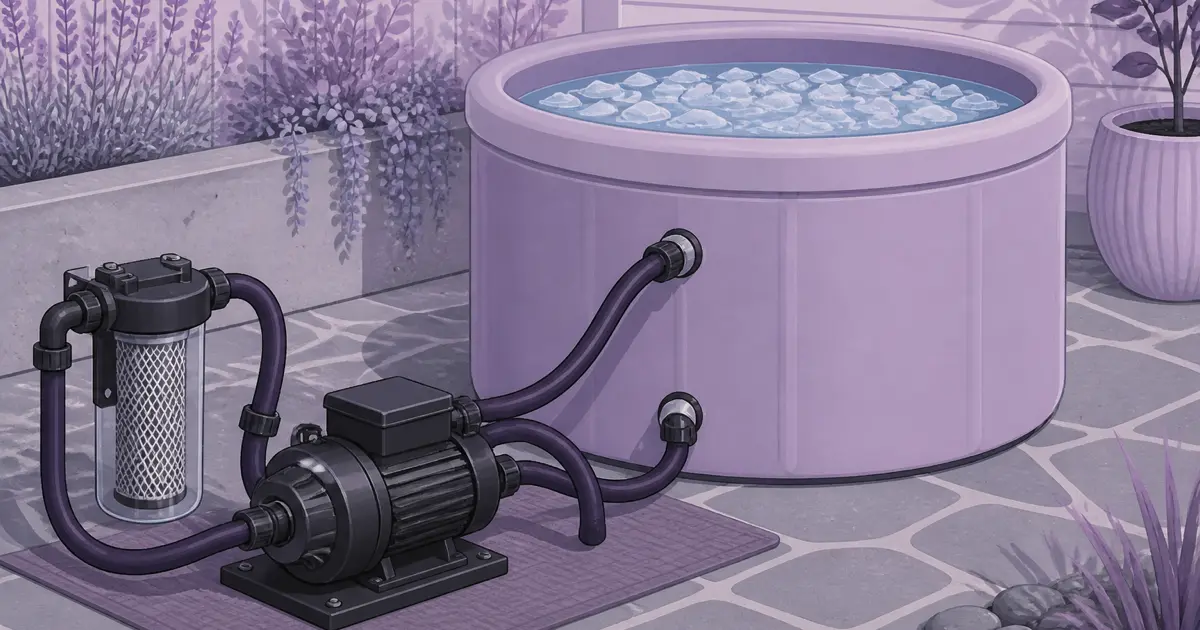
The short answer: A cold plunge pump needs the right flow, fittings, and safe placement. Do not choose one by GPH alone.
Our picks
This guide is for US home buyers who want a practical answer, not a pile of accessories. We checked the current US Amazon listing, rating, and review evidence for the pick below. Product listings change, so confirm the details in your cart before you buy. Water and electricity require care. Follow the pump and chiller manuals, use protected outlets, and get qualified help if the installation is beyond you.
If you are still deciding on the main tub, read our cold plunge guide first. If you already have a loop, the cold plunge chiller guide explains the bigger equipment choices. This page focuses on one smaller, clearly defined job.
Start with the existing setup
Match the pump to your tub volume, hose size, filter restriction, and chiller instructions before you order. Write down the exact model, the dimensions you can measure, and anything the manufacturer says about compatible parts. A purchase page can make two items look interchangeable when a half-inch fitting, a door swing, or a lid shape says otherwise.
Think about the normal week, too. The best accessory is the one that makes the setup easier to use and clean. If it adds another awkward storage bin, a leak point, or ten minutes of setup, it may not be an upgrade. Start with the small problem you are trying to solve and avoid buying a solution for a more elaborate system than you own.
What to look for before ordering
Read the full product title, not only the photo. Check the measurements, included parts, materials, return policy, and recent one- through three-star reviews. Those reviews often reveal the ordinary problems: a part that does not fit the advertised size, a short cable, a slippery surface, or a bundle that omitted a connector.
The Danner Supreme Aqua-Mag 1200 GPH Magnetic Drive Water Pump is a reasonable starting point for the right compatible setup. Its current US Amazon listing met our 4.0-star floor and showed real ownership feedback. That does not make it universal. Confirm the fit against your equipment before you break the packaging.
Do not treat review averages as engineering instructions. Look for repeated comments about fit, durability, cleaning, noise, and ease of use. A few detailed reviews are more useful than generic praise. Skip listings with thin review evidence, unclear dimensions, or promises that conflict with the product manual.
Make the installation boring
A quiet, stable setup is usually the right setup. Clear the area, keep a towel handy, and make sure you can inspect the part without moving the whole tub or cabin. Do not pinch hoses, block vents, route cords through wet traffic areas, or turn a doorway into an obstacle course.
Follow the main equipment manual before any marketplace listing. Manufacturers know their own fittings, load limits, temperatures, and electrical requirements better than a generic accessory page. If a step feels improvised, pause. Home recovery gear should make a routine easier, not create a weekend troubleshooting hobby.
For an accessory used around water, check it at the start of each session. Look for drips, loose clamps, warped material, sharp edges, or a change in sound. Small issues are easier to solve before they turn into water on a floor or an unusable tub.
Keep maintenance realistic
Set a simple recurring reminder instead of relying on memory. Wipe down the nearby surfaces, inspect the item, and check the main equipment against its instructions. A cover, mat, pump, filter, or water-care product only helps when it stays clean and is used correctly.
Avoid stacking chemicals, cleaners, or aftermarket fittings without understanding what each one does. More product is not automatically better. Use one compatible plan, track what you change, and give the system time to show whether it works.
A useful rule is to replace items based on condition, not just a calendar. Replace a part when the manufacturer recommends it, when the fit has changed, or when it no longer performs its basic job. Keep receipts and model details somewhere you can find them when it is time to reorder.
Common buying mistakes
The first mistake is buying the product before measuring. The second is assuming a product labeled for cold plunges or saunas works with every version. The third is ignoring the unglamorous details such as drainage, cleaning access, airflow, and where a cord or hose actually sits.
Another mistake is using a new accessory to postpone a basic cleaning, repair, or water change. If the setup is dirty, leaking, or unsafe, fix that first. Accessories can support a good routine. They do not replace one.
Bottom line
A cold plunge pump needs the right flow, fittings, and safe placement. Do not choose one by GPH alone. Choose the Danner Supreme Aqua-Mag 1200 GPH Magnetic Drive Water Pump only after confirming its current Amazon listing and compatibility with your own equipment. Keep the surrounding routine simple, inspect it regularly, and do not turn a minor home recovery upgrade into a risky DIY project.
Frequently Asked Questions
What should I check first?
Match the pump to your tub volume, hose size, filter restriction, and chiller instructions before you order.
Do I need the most expensive option?
No. Buy the option that fits your existing setup and solves the actual maintenance or comfort problem.
Can I use this with any home recovery setup?
No. Check the manufacturer instructions, dimensions, and connection requirements for your specific equipment.
How often should I inspect the setup?
Check it before regular use and after any change in performance, fit, noise, leaks, or cleanliness.
What should make me stop and reassess?
Stop when equipment leaks, power arrangements feel unsafe, or water and surfaces look or smell wrong.
Where can I compare the main equipment?
Start with our cold plunge guide and related home recovery guides before buying accessories.