Best Muscle Stimulator (2026): TENS and EMS Units Compared
The TENS 7000 is the best muscle stimulator for most buyers who want simple controls, a long review history, and replaceable standard electrode pads.
By Alex Turner
Recoverypicks is reader-supported. As an Amazon Associate we earn from qualifying purchases. Learn more.
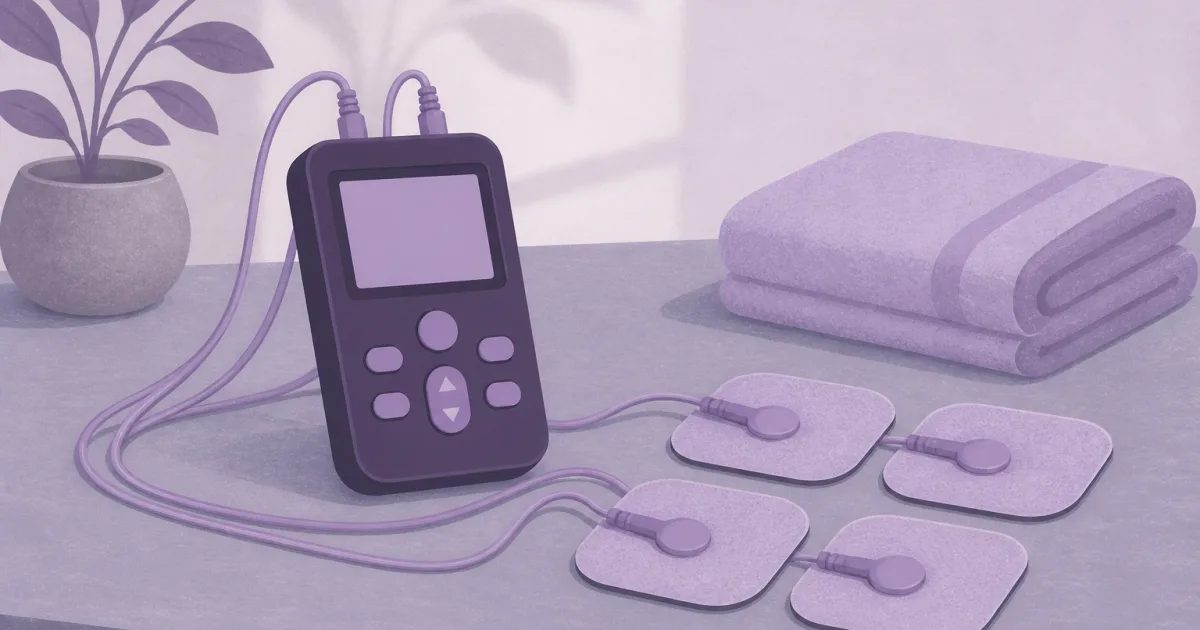
The short answer: The TENS 7000 is the best muscle stimulator for most home users because its manual controls are easy to adjust, its pads are replaceable, and its long review record exposes the good and the annoying parts. Choose the AUVON if you want a rechargeable unit. Buy the iSTIM EV-805 only if you know you need EMS and four channels.
Our picks
We compared the current US Amazon listings, specifications, safety instructions, ratings, and detailed owner feedback for this guide. This is research-based buying advice. We have not clinically tested these devices, and a muscle stimulator is not a replacement for medical care.
Best muscle stimulator picks at a glance
The right choice depends more on controls, pad compatibility, and safe placement than on the number of programs. A device with 20 modes is not automatically more useful than one with five clear settings.
TENS 7000 is the best muscle stimulator for most buyers
The TENS 7000 has been sold for years, and that history is its strongest advantage. Its live Amazon listing showed 4.6 stars from more than 111,000 ratings when checked. The large review pool includes specific reports about intensity, pad life, battery use, control knobs, and long-term durability. That gives you more useful evidence than a perfect average built from a few dozen reviews.
This is a two-channel TENS unit. Each channel has its own intensity knob, so you can make a small adjustment without tapping through menus. It runs on a standard 9V battery and uses lead wires with replaceable electrode pads. The controls are old-fashioned, but they are also direct.
Choose it if your priority is temporary TENS use with simple manual control. Skip it if you specifically need EMS programs or want USB charging. The bundled case is not small, and the exposed knobs can move if you carry the unit loosely.
AUVON is the best rechargeable value
The AUVON Dual Channel TENS Unit replaces the 9V battery and manual dials with a rechargeable battery, screen, and 20 preset modes. Its two channels can run different modes and intensity levels. That is useful when two areas need different settings, but beginners should still start with one area and a low intensity.
The live listing showed 4.6 stars from more than 43,000 ratings at verification. Detailed reviews discuss the compact controls, strong output, pad adhesion, and the learning curve created by many modes. The kit includes both square and rectangular pads, which gives you more placement options than a box containing one pad shape.
Choose the AUVON if charging is more convenient than keeping 9V batteries around. Check the exact replacement-pad connector before ordering extras. Pads are consumable, and a low purchase price matters less if compatible replacements are hard to find later.
iSTIM EV-805 is best for four-channel TENS and EMS
The iSTIM EV-805 is the most capable pick here. It has four channels, dedicated TENS and EMS programs, a rechargeable battery, and support for up to eight pads. Its live Amazon listing showed 4.5 stars from more than 2,700 ratings when checked.
That extra capacity makes sense for an experienced user who has been told how to use TENS or EMS and needs wider coverage. It is unnecessary for someone who wants to place two or four pads on one sore area after ordinary activity. More channels also mean more wires to route, more skin to check, and more opportunities to put a pad in the wrong place.
Owner feedback is detailed enough to reveal real setup tradeoffs. Buyers mention the broad pad assortment and useful carrying case, but the controls and program choices take time to understand. Choose this model for a known four-channel or EMS need, not because the longer feature list sounds more advanced.
TENS, EMS, and massage modes are not the same
TENS stands for transcutaneous electrical nerve stimulation. These devices send low-voltage electrical pulses through adhesive pads on the skin. TENS is generally used for temporary pain relief. It does not repair an injury or identify why something hurts.
EMS stands for electrical muscle stimulation. It produces visible or noticeable muscle contractions and is used in some recovery and rehabilitation settings. Pad placement, intensity, and whether EMS is appropriate depend on your health and goal. Ask a qualified clinician when you are unsure.
Many units also label patterns as kneading, tapping, acupuncture, or massage. Those names describe pulse patterns. They do not turn the device into hands-on massage, acupuncture, or a medical treatment.
How to choose a home muscle stimulator
Start with the intended use
Buy TENS if a healthcare professional has suggested TENS or you want a device labeled for temporary relief of sore, aching muscles. Choose a TENS and EMS combo only when you understand which mode you plan to use. Do not buy an EMS feature to experiment on an injury.
Prefer controllable intensity
Intensity should increase in small, predictable steps. Independent channels are useful because the same level can feel different on two body areas. Start low every time you move the pads. Dry skin, pad condition, and placement can change how a setting feels.
Check replacement pads before checkout
Electrode pads wear out. Confirm the connector type, pad dimensions, and cost of replacements before buying the machine. Standard lead-wire connectors give you more options. Proprietary snap-on wireless pads can be convenient, but they may cost more and limit replacements to one brand.
Count channels, not marketing modes
A channel controls one pair of pads. Two channels usually support four pads, while four channels may support eight. Two channels are enough for many home setups. Four channels make sense only when you need wider coverage and can safely place every electrode.
Read the contraindications
Do not use TENS or EMS with a pacemaker or another implanted electronic device unless your medical team explicitly approves it. Manufacturer warnings also commonly cover pregnancy, epilepsy, heart conditions, impaired sensation, broken skin, and placement near the head, neck, or chest. Read the exact manual before the first session.
What buyer reviews tell us
The useful reviews describe a real body area, pad placement, intensity, session length, and what happened after repeated use. They also mention adhesive failure, wire damage, confusing controls, or skin irritation. Vague claims that a device fixed everything are less helpful.
The TENS 7000 and AUVON both have unusually large review histories, which makes recurring complaints easier to spot. The iSTIM pool is smaller but still substantial and includes detailed ownership feedback. All three cleared our 4.0-star floor when verified.
No review can tell you whether electrical stimulation is safe for your health history. Use reviews to judge controls, durability, pad quality, and setup effort. Use the manual and professional advice for medical decisions.
Our final recommendation
Buy the TENS 7000 if you want the clearest route to a proven, two-channel TENS unit with direct controls. Choose the AUVON if a rechargeable battery and preset programs matter more. Step up to the iSTIM EV-805 only when four channels and dedicated EMS modes solve a specific need.
Whichever model you choose, read the manual before attaching the pads. Start with low intensity, keep sessions within the instructions, and stop if the sensation is painful or your skin reacts.
For non-electrical home recovery options, compare our best massage guns, best heating pads, and compression boots.
Frequently Asked Questions
What is the difference between TENS and EMS?
TENS is intended for temporary pain relief by stimulating sensory nerves. EMS causes muscles to contract and is commonly marketed for muscle activation or recovery. A combo unit can provide both, but the modes are not interchangeable.
Can I use a muscle stimulator every day?
Follow the device manual and advice from your clinician. More intensity or longer sessions are not automatically better. Stop if the pads cause skin irritation, pain, numbness, or an unexpected reaction.
Where should electrode pads not be placed?
Do not place pads across the chest, on the front or sides of the neck, on the head, over broken or numb skin, or anywhere the product manual forbids. Never improvise pad placement.
Can someone with a pacemaker use a TENS or EMS unit?
Do not use one without explicit medical clearance. Manufacturers commonly warn against use with pacemakers and other implanted electronic devices. Pregnancy, epilepsy, heart conditions, and recent surgery also require professional guidance.
How long do electrode pads last?
Pad life depends on skin preparation, storage, and adhesive quality. Clean, dry skin and replacing the plastic backing after each use help. Budget for compatible replacement pads before choosing a unit.
Is a four-channel muscle stimulator better?
Only if you need the extra coverage and can place every pad correctly. A two-channel unit is easier to set up and is enough for many home users. Four channels add wires, pads, and controls.
Does a muscle stimulator replace physical therapy?
No. It is a home comfort or recovery tool, not a diagnosis or a substitute for an exercise plan, medical care, or physical therapy.